Showing posts with label J.D. James. Show all posts

Friday, January 15, 2016

Pacing makes or breaks a story.

PACING
This is essential for every story whether it be a full length novel or a short story. It doesn’t matter if you’re writing romance, thriller, horror, fantasy, sci fi, or YA. You must ensure your readers will turn the page to see what happens next. Your TASK is to make the readers want to keep reading no matter what is happing around them.

  • a.     Something must happen in every scene.
  • b.     A question must remain unanswered at the end of ever chapter except the very last one.
  • c.      Ensure your Main Character propels that action. The reader wants to emphasize with the MC and intimately share experiences and the MC’s journey. Don’t give the reader a reason to stop turning the pages.
  • d.     DON’T tell the reader everything that’s going to happen before it happens as that can destroy the suspense and deprive the reader the enjoyment of surprise.
  • e.     Give your MC bigger challenges to overcome as your story progresses. These should be compelling and the MC must overcome these to move on. The MC’s character should be revealed and grow as the MC moves through these challenges.
  • f.       Throw your MC into a pressure cooker so they must do such and such by a certain time otherwise e.g. the world will end, the MC’s mother will make the biggest mistake of her life, the MC’s father will miss his flight, etc.
  • g.     Lee Child, says: “Write the slow parts fast and the fast parts slow.”
  • h.     DON’T load the first chapter with back story and descriptions as this will slow the pacing from the get go. See how much you can cut that isn’t missed. No need to tell the reader that the MC’s parents were church goers, loved a good steak, had to shop on Thursdays or the world would end, did not do the washing on a Sunday, etc. Let the reader find this out as they progress through the story and only if it moves the story forward.
  • i.        Dialogue is great but shouldn’t replace action. If you have no dialogue on any page in your story then it better be compelling otherwise the reader will stop reading.
  • j.       Aim for clarity. Less is more.
  • k.     DON’T use a longer word when a short word will do the task.
  • l.        Ensure that all unanswered questions are answered by the end of the story. If you don’t do this, then the reader will be frustrated that you left them hanging. Nothing spoils a good tale than one with an incomplete ending.
  •  

Sunday, January 10, 2016

My journey to publication and sales of Sleep then my Princess

Hi

My journey with my first thriller, being a complete novice at marketing and kindle: I uploaded The Deadly Caress and it didn't sell a single copy for about five weeks and then sold about  6 copies each time I had used the Amazon facility to reduce the book from $2.99 to 99c. I no longer use the Kindle Countdown Deal as I've found it to restricting as you have to have the book listed at or above $2.99 for 3 months prior to your sale date. And I've opted out of Kindle Select but still have the book listed for borrows but I never get any borrows anymore. Update: Just found out that Kindle changed their policy and don't allow borrows now if you're not in Kindle Select.

www.getBook.at/B00I0DI0MY

With my second thriller Sleep then my Princess, I was prepared. 

www.getbook.at/B016G5T7AG

I took advantage of the pre-order facility on Kindle and uploaded my thriller about 6 weeks before launch. Changed the cover a few times till I was happy with it. I had a guy on Fiverr do a cover but no one that I asked in my FB buddy groups really liked it. So I got another cover made with a different cover designer. Put that cover up for comment on my FB buddy groups and played with the font till it seemed okay and asked my FB groups again. The font I would have gone with was voted second best so I opted with the font which everyone thought was best. I figured, who am I to know what will draw the public eye to buy the book. I got six beta readers to read through the manuscript and they offered their suggestions which I diligently worked through. I had two editors go through the manuscript as I'm not good at picking up all the typos and over used words. 

A month prior to launch I started marketing it via FB groups (free) and my twitter page listed at 99c for pre-launch. I have to say that I'm in so many FB groups now where you can post your promo that I've lost count (maybe about 50-60).  However, FB won't let you post more than 10 promos in a certain time frame any more. They freeze your account for 14 days if you do. They want you to take up their paid promos instead.

I lined up two paid promotions for the launch date (total cost was $80). Pre-sales were at 19 units (due to FB groups) on launch day Oct 30th, Nov 2nd 19 units,  Nov 14th 90 units, Nov 23rd 89 units, and then it started dropping a little with some highs on Nov 30th 56 units, Dec 12th 50 units, Jan 4th 47, and now Jan 9th 23 units. Update: March 2016 it's at around 40 units most days.

I also did a Fiverr promo for $5.50 two weeks ago and a blog listing via Fiverr a week ago again $5.50. I might do a FB promo shortly to raise the momentum in sales. I initially intended to raise the price from 99c a week after launch but since Sleep then my Princess was selling so well, I was too scared to do this. So it's still at 99c for now.

I didn't get into the top #100 sold in the Kindle store but was in the top #12 in my category for about 7 weeks in the USA. I have now slipped to #23 in Books > Mystery, Thriller & Suspense > Thrillers & Suspense > Medical, USA. I even got into the top #35 in my category in the UK store and Au as well at one point.

I have to point out that I have got 3 awful one star reviews which haven't seemed to have stopped my sales, thank goodness. One of the reviewers couldn't even construct a sentence nor spell.

Monday, April 27, 2015

How to become a best selling author


Self-Publishing Success Stories: The Anatomy of a Kindle Bestseller


Writing for writing’s sake is absolutely brilliant, but many of us have ambitions to be #1 on the Amazon charts, selling hundreds of thousands of books and raking in the cash!
successThere’s nothing wrong with ambition, especially when others have walked the path before us. Today, #1 Amazon UK bestselling author Mark Edwardsexamines some of the characteristics of what goes into a Kindle bestseller.
As self-published authors we are all inspired by the sight of other indie writers tearing up the bestseller lists, rolling in royalty checks, getting big bucks movie and book deals, and achieving all the things we fantasise about in those misty moments when we raise our heads from our keyboards and allow ourselves to dream.

Personal experience

I was one of those fortunate writers who has achieved self-publishing success. In 2011, my writing partner Louise Voss and I hit No.1 on Amazon.co.uk and sold just under 100,000 ebooks.
This wasn’t dumb luck, but the result of a strategy, based on years of marketing experience. I have identified seven factors that can propel a book onto the bestseller lists if you can get them all lined up and firing.  But before talking about me, I want to look at another self-published success story.
Amazon UK recently released a list of the ten biggest-selling self-published books of 2012. At No.2 was Only the Innocent, a mystery novel by Rachel Abbott, which had hogged the top spot on Amazon for a month early in the year, selling 100,000 copies at a price that earned Rachel the 70% royalty rate. She has now teamed up with Amazon who are publishing Only the Innocent in the US while Rachel remains independent in the UK.

 How Rachel Abbott hit #1 on Amazon

Rachel is refreshingly open about how she did it – and the first part of that was about getting the basics right: a gripping book with a strong concept; an evocative and professional-looking cover; and an excellent book description that makes you want to read the book.
Next, Rachel did something very simple but vital: she wrote a marketing plan. Then she carried that plan out. This does not sound remarkable but you’d be amazed how few writers – and publishers, it has to be said – bother to do this. But if you are serious about success, you need a plan and you need to stick to it. Or rather, you need to follow your plan, doing more of the things that work, and less of the things that don’t. (That’s the secret of marketing, by the way.)

What were some of the things that worked for Rachel?

Selling ebooks is all about exposure – it isn’t true that good books will naturally rise to the top. You have to get them noticed. So Rachel focused on getting her book seen, and to do this she did two things.
Firstly, she used Twitter to get word of her books out there. She didn’t just set up a Twitter account and start banging out links (because that’s a waste of time). Instead, she used tools and services like Tweet Adder and Triberr to increase her exposure. Triberr is interesting because it’s like a club where Twitter users get together to retweet each other’s posts, thus greatly increasing exposure.
Her approach to getting reviews was professional and clever. She identified the blogs and sites that she thought might review her book, then created a template that she sent to the review sites clearly and politely requesting a review. I am sure that if you run such a site, and are inundated with amateur requests, receiving something that looks professional and sane will stand out. It’s like receiving a great covering letter and resumé from a job candidate.
The effect of the social activity and picking up reviews was to slowly build sales – with the aim of getting noticed by Amazon. This tallies with my own experience. I realized very early on that the best way to sell books was to get onto the ‘also bought’ bars of popular books. Short of getting into the Daily Deals or being chosen by Amazon for a featured list, the ‘also bought’ bars are the most important pieces of real estate on the site. If you can get among the first books on the ‘also bought’ bar of a top ten book, your book will also follow it up the chart. Guaranteed.

It’s like pushing a boulder up a hill.

All the effort goes into the ascent – the slow, tortuous climb to the top, one step at a time. Every sale takes you a little further up that hill, and more likely to get picked up by the magic algorithms. Then, if you have done everything else right – the cover, the description, garnered good reviews – the boulder will grow lighter and easy to push. Then – when you get picked up by the algorithms and gain exposure – you can let go of the boulder and let Amazon do all the work for you!
My strategy was very similar to Rachel’s, except I didn’t use Twitter to reach readers (I used it, as I still do, to network with potential influencers, the bloggers and journalists and other writers who can help you gain exposure).

Using blogging to get noticed

My strategy was to set up a blog – IndieIQ.com – on which I interviewed the most popular self-published authors I could find. My belief was that if I interviewed someone with a large following, those followers would come to my blog to read about their favourite author, and maybe check out my books as a result. I also did everything I could to get onto other blogs and sites.
I made sure that Killing Cupid and Catch Your Death both had strong, eye-catching covers and great descriptions, and emailed everyone I could think of who might give the books a mention. One day, after doing this for months, sales suddenly took off – because the algorithms had kicked in. At that point, I tweaked the description of Killing Cupid and sales doubled immediately.

So what are the lessons that self-published writers can learn from my and Rachel’s experience?

Here are my 7 take-home tips.
  1. Design a cover that tells the reader exactly what kind of book this is and that looks professional.
  2. Write a book description that makes the reader desperate to read it.
  3. Write a marketing plan and carry it out – adapting it as you go along to do more of the stuff that’s worthwhile and none of the stuff that isn’t.
  4. Instead of sending out endless links to your own followers on Twitter, try to get retweets – reach your audience’s audience.
  5. Contact, in a friendly and professional way, every single person and website you can think of who might want to give you exposure – and give them a good reason for doing so.
  6. Associate with successful writers – learn from them and get in front of their fans.
  7. Be prepared to work damn hard!
You can download my free guide to writing a sizzling book description from IndieIQ – and I am currently accepting new clients. I can write a great book description for you or critique your current one.  Contact me for full details.
Listen to an audio interview with Rachel Abbott here on how she used reviews and social media to get to the top of the Amazon charts
What questions do you have for Mark in terms of how he and Rachel hit the top spot on Amazon? Please do leave them in the comments.
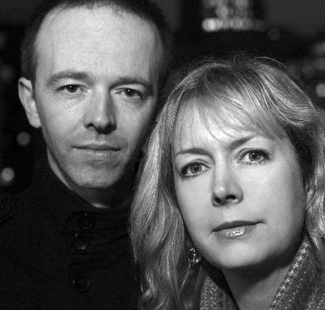
mark edwards and louise vossMark Edwards is the co-author, with Louise Voss, of thrillers Killing Cupid and Catch Your Death, which were originally huge hits when self-published in 2011, leading to a deal with HarperCollins.
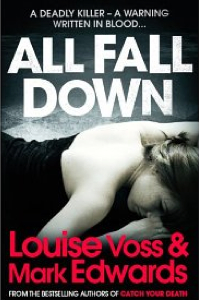
all fall downTheir third novel, All Fall Down, has just been published. Having worked in marketing for years, Mark also runs IndieIQ.com and offers services to writers including writing book descriptions. He can be found on Twitter @mredwards.
Rachel Abbott is re-releasing Only The Innocent in Feb 2013.
To read more about this duo click on the link below....

Sunday, October 05, 2014

P.D. James's 10 tips for writing novels

This great interview I found on the BBC website:

PD James's 10 tips for writing novels


PD James

Related Stories

Although she didn't publish her first novel until she was 42, Phyllis Dorothy James had been writing since childhood.
Now a celebrated crime writer, she has penned more than 20 books, including The Children Of Men, and the Adam Dalgliesh mystery series.
At the age of 93, she says she wants to write just one more detective novel.
Here are her top 10 tips for being an author.

1. You must be born to write

You can't teach someone to know how to use words effectively and beautifully. You can help people who can write to write more effectively and you can probably teach people a lot of little tips for writing a novel, but I don't think somebody who cannot write and does not care for words can ever be made into a writer. It just is not possible.
Nobody could make me into a musician. Somebody might be able to teach me how to play the piano reasonably well after a lot of effort, but they can't make a musician out of me and you cannot make a writer, I do feel that very profoundly.

2. Write about what you know

You absolutely should write about what you know. There are all sorts of small things that you should store up and use, nothing is lost to a writer. You have to learn to stand outside of yourself. All experience, whether it is painful or whether it is happy is somehow stored up and sooner or later it's used.
I love situations where people are thrown together in unwelcome proximity. where all kinds of reprehensible emotions can bubble up. I think you must write what you feel you want to write because then the book is genuine and that comes through.
I believe that someone who can write, who has a feeling for words and knows how to use them will find a publisher. Because after all, publishers do still need to find new writers. We all get old and we die and that's that and there have to be successors.

3. Find your own routine

I think all we writers are different. It's interesting, isn't it, how different we are?
Some people have to have the room, the pen and others do everything on a computer. I write by hand and I can write more or less anywhere as long as I've got a comfortable chair, a table, an unlimited amount of biros to write with and lined paper to write on. And then the next day when my PA comes, which she does at 10 o'clock, then I've got quite a lot to dictate to her and she puts it on to the computer, prints it out and I do the first revision.
In a sense, therefore, I revise as I go. It's important to get up early - before London really wakes and the telephone calls begin and the emails pile up. This is the best time for me, the time of quiet in the morning,

4. Be aware that the business is changing

Goodness gracious, how the world of publishing has changed! It is much easier now to produce a manuscript with all the modern technology. It is probably a greater advantage now, more than ever before, to have an agent between you and the publisher.
Everything has changed and it's really quite astonishing, because people can self-publish now. I would once have thought that that was rather a self-defeating way of doing it but actually publishers do look at what is self-published and there are examples of people picking up very lucrative deals.

5. Read, write and don't daydream!

To write well, I advise people to read widely. See how people who are successful and good get their results, but don't copy them. And then you've got to write! We learn to write by writing, not by just facing an empty page and dreaming of the wonderful success we are going to have. I don't think it matters much what you use as practice, it might be a short story, it might be the beginning of a novel, or it might just be something for the local magazine, but you must write and try and improve your writing all the time. Don't think about it or talk about it, get the words down.

6. Enjoy your own company

It is undoubtedly a lonely career, but I suspect that people who find it terribly lonely are not writers. I think if you are a writer you realise how valuable the time is when you are absolutely alone with your characters in complete peace. I think it is a necessary loneliness for most writers - they wouldn't want to be always in the middle of everything having a wonderful life. I've never felt lonely as a writer, not really, but I know people do.

7. Choose a good setting

Something always sparks off a novel, of course. With me, it's always the setting. I think I have a strong response to what I think of as the 'spirit of a place'. I remember I was looking for an idea in East Anglia and standing on a very lonely stretch of beach. I shut my eyes and listened to the sound of the waves breaking over the pebble shore. Then I opened them and turned from looking at the dangerous and cold North Sea to look up and there, overshadowing this lonely stretch of beach was the great, empty, huge white outline of Sizewell nuclear power station. In that moment I knew I had a novel. It was called Devices and Desires.

8. Never go anywhere without a notebook

Never go anywhere without a notebook because you can see a face that will be exactly the right face for one of your characters, you can see place and think of the perfect words to describe it. I do that when I'm writing, I think it's a sensible thing for writers to do.
I've written little bits of my next novel, things that have occurred to me. I've got the setting already. I've got the title, I've got most of the plot and I shall start some serious writing of it next month, I think.

9. Never talk about a book before it is finished

I never talk about a book before it is finished and I never show it to anybody until it is finished and I don't show it to anybody even then, except for my publisher and my agent. Then there is this awful time until they phone.
I'm usually pretty confident by the time I've sent it in but I have those moments when I think, 'well I sent it to them on Friday, by Saturday night they should be ringing up to say how wonderful it is!'
I'm always aware that people might have preferences and think that one book is better than another.

10. Know when to stop

I am lucky to have written as many books as I have, really, and it has been a joy. With old age, it becomes very difficult. It takes longer for the inspiration to come, but the thing about being a writer is that you need to write.
What I am working on now will be another detective story, it does seem important to write one more. I think it is very important to know when to stop.
Some writers, particularly of detective fiction, have published books that they should not have published. I don't think my publisher would let me do that and I don't think my children would like me to. I hope I would know myself whether a book was worth publishing. I think while I am alive, I shall write. There will be a time to stop writing but that will probably be when I come to a stop, too.

http://www.bbc.com/news/entertainment-arts-24867584