Showing posts with label mystery. Show all posts

Thursday, November 20, 2014

Six tips to bring your book out of the doldrums

More than ever before authors are struggling to make sense of what's happening with ebook publishing and keep up.
When do we get time to write after blogging, facebooking, twittering, etc? We're told you can't get seen and your book purchased if you're not socially marketing yourself.  It's never easy but we must find the time.

I've just read Mark Coker's tips and wanted to share them here.

Six Makeover Tips:  How to Bring a Book Back from the Doldrums 

Makeover Tip #1 – Look at your reviews at Smashwords, Apple, B&N and Amazon.  Ignore the reviews from friends and family, they don’t count.  Average them up.  How many stars are you getting out of five?

Reviews of Never Too Far by
Abbi Glines (Apple iBookstore)
Today, when I look at the top 20 bestsellers at the Apple iBookstore, they’re averaging 4 stars.  On other random days I’ve done this test, they averaged 4.5.  The #1 bestselling book today at Apple is Never Too Far by Abbi Glines (distributed by Smashwords), and it averages 4.5 stars.  Some of the representative comments are, “loved this book,” “Amazing,” “couldn’t put it down,” “couldn’t stop reading,” “such a wonderful story,” “cannot wait for book 3!” and, “this book hasn’t been out 24 hours and yet I read it twice already.”  If you want to be a bestseller, good or good enough is not good enough.  

You need to WOW your reader.  It doesn’t matter if you write romance, mystery or non-fiction, if your book doesn’t move the reader to an emotional extreme, your job isn’t done.  Take the case of my novel, Boob Tube.  It averages around 3.5 stars.  That’s not good enough.  We’re not wowing readers.  My wife and I should probably do a major revision if we want better reviews.  Our sales range from 20 to 40 copies a month.  What if after a revision, we averaged 4.5 stars?  Imagine how that would move the needle on sales.

    What if you don’t have reviews? – This is as big of a problem as poor reviews.  If your book has been out for more than three months and it’s not selling well and you don’t have reviews, I’d set the price to free, at least for a limited time.  What do you have to lose?  Readers aren’t finding you anyway.  That’s the decision we came to with Boob Tube.  For the first two years (2008-2009), Boob Tube sold maybe 20 copies.  It had only one or two reviews.  My wife and I decided to set the price to free for six months.  We got 40,000 downloads, a lot of reviews, and even our first fan mail (yay!).  Then we set the price to $2.99 and it started selling.  Without reviews at the retailers, Goodreads, LibraryThing and elsewhere, few readers will take a chance on you.  FREE helps readers take that chance.

Makeover Tip #2 – Redo your Cover Image.  If your book’s reviews are averaging over four stars, yet the book isn’t selling, your cover is probably the problem.  This was the case last year for Smashwords author R.L. Mathewson.  She was earning fabulous “WOW” reviews from readers, yet she was only selling a few copies a day (even still, a few copies a day is way above average for most authors). Read the interview with R.L. here
When she upgraded her cover images, her books immediately took off and hit the N.Y. Times bestseller list.  Great reviews plus a great cover can make all the difference.  A great cover image makes a promise to the reader.  A poor cover image chases potential readers away.  Does your cover make a promise?

Here’s a quick test, and a challenge:  If you were to strip away the title and author name, does the image tell the reader, “this is the book you’re looking for to experience [the feeling of first love for romance; fear for horror; edge of your seat suspense for thrillers; knowledge for a non-fiction how-to; an inspiring story of personal journey for a memoir, etc].”

Is the cover image professional?  Does it look as good or better than the top-10 sellers in your category or genre?  The human brain is programmed to process imagery faster than written words.  When a reader is browsing book listings, they’re looking to have their attention arrested by something that speaks to them.   Everything else is noise.  Don’t be the noise.

Back to my novel.  A couple bestselling Smashwords authors have told me that the cover of Boob Tube doesn't work.  It took me awhile to come around, but I agree with them now.  The image focuses on breasts, which are an obsessive, almost-debilitating focus for the actresses on daytime television soaps.  We explore this in the book.  Yet to the reader, the image sends conflicting messages.  Is this book erotica, or pornography?  No, of course it’s not, but the reader doesn’t know.  Because the image isn’t resonating with the right promise, we’re probably chasing away readers who would otherwise be drawn to the story.

Makeover Tip #3 – Is your book priced too high?  When a book is priced too high, it makes the book less affordable to the reader. If you're an unknown author, it makes the reader less willing to take a chance on you.  For readers who could afford it, the high price can makes the book less desirable when there are alternative books of equal quality at less cost.  Last year, when we conducted a comprehensive study of the impact of price on unit downloads and gross sales, we found that lower prices moved more unit sales than higher prices (no surprise there).  We found $1.99 and below underperformed in terms of gross sales (unit sales * price).  We found books priced at $2.99 earned slightly more than books priced over $10.00, yet enjoyed six times as many unit sales.

Dollars in your pocket are nice, but over the long term, the greater number of readers is what will drive your fan base and future sales.  If your book is priced over $5.99, and it’s not selling well, experiment with a lower price and see what impact it has.  There’s one other potential advantage of lower prices:  if the reader feels they received a great read for the price, they may be more likely to give you a positive review, and a positive reviews will lead to more readers.

Makeover tip #4 – Look at your sampling to sales conversion ratio.  The Smashwords store has a little-known feature I think is entirely unique in the ebook retailing world:  We tell you how many partial samples were downloaded.  If you click to your Dashboard, you’ll see a column for book sales and a column for downloads.  The download count is a crude metric, but if you understand how it works, you’ll be able to use it as a relatively good tool.  This data is only for sales and downloads in the Smashwords store.

The download data includes both sample downloads and full book downloads for purchased books.  If a customer or sampler downloads in multiple formats (such as epub and mobi), or downloads multiple times, each time will tick the download count higher.  To make the data cleaner, subtract your paid sales from the download count.  Divide your sales at Smashwords.com by the number of downloads.  This will tell you, roughly, what percentage of downloaders actually purchase your book.

When I do the numbers on my priced book, The 10-Minute PR Checklist, I find that approximately 13% of sample downloads lead to sale.  That’s pretty good.  When we last ran the average numbers a couple years ago, we found that site-wide, about 1 in 50 sample downloads led to sale, but when we looked only at books that had actually sold, the number was closer to 1 in 25 (about 4%).  I’ve seen multiple recent bestsellers at Smashwords where the conversion ratio is 50%.  That’s amazing!  Use these numbers as rough guides.  If you have multiple books at Smashwords, you can see how the numbers compare across your list.  Compare with your friends.  If you’ve had 150 sample downloads and zero sales, such as in my Tip 6 example below, it’s fair to say readers are sending you a message.

Makeover Tip #5 – Are you targeting the right audience?  As a writer, you’re never going to satisfy every reader.  That’s okay.  Don’t try.  Readers who love horror novels may not love romance.  Know your target audience, and then make sure your title, book cover, book description, categorization and marketing are all aligned to target that audience with fine-tuned precision.  If you send the wrong messages, you’ll fail to attract the right readers.  Instead, you’ll attract the wrong reader, and the wrong reader will give you poor reviews.  Again, I’ll use my own novel as an example (since I’m not afraid to illustrate my mistakes!).  Early in our novel, a dead body is discovered, so there’s a bit of a mystery about who did it.  It’s a minor plot point, and the book isn’t categorized as mystery.  However, at one time in 2011, our book description played up the mystery surrounding the murder.  For at least one reader, after she read the description she downloaded the book thinking it was a murder mystery.  It’s not.  It’s a book about the dark side of Hollywood celebrity.  

As a result, we disappointed her, and received this one-star review:
“If you want to read about drug use, masochism, naive behavior leading to wrecked lives and truly disgusting eating disorders, this book is for you. If you were looking for a murder mystery, look somewhere else. I got more than 50% into the book and no one was calling the death a murder. So, no investigation, no questions, none of the things that make a book a murder mystery.” 
Following this review, I removed the murder-mystery subplot from the description and focused on the top themes.  So take a fresh look at your description, cover, categorization and marketing and make sure you’re targeting the right reader.  Avoid the temptation to target a broader-than-necessary market.

Makeover Tip #6 – Pride goes before the fall.  It’s tough being a writer.  You pour your heart and soul into your words, and then lay your words bare before the world to judge.  It takes bravery and confidence to publish.   Speaking from personal experience, it’s heartbreaking to receive your first one-star review.  We all get them.  

Over at Amazon, where I have the most reviews, I received this about Boob Tube:
“A total waste of my time. As another reviewer said, the best part was when I decided to stop reading it! If I could give it a minus star, I would.” 
OUCH!  Nothing’s worse than when the reader hates the book so much they don’t even finish it, and then they leave a review like that just to drive the knife deeper.  What if the book got better later?  What if everything started making sense on the next page?  Readers are a fickle bunch.  

To press forward as a writer, we have to decide what we can learn from, and what we can ignore.  Find your strength from your five-star reviews (we have those too!), and carefully find your inspiration about where you might improve from the negative reviews.  I try to learn something from every review, even if I don’t agree with it.  Some writers, after receiving such scathing criticism, might feel inclined to curl up in a fetal position, unpublish their books, and give up.  Never give up!

The opposite response to reader feedback, however, can be equally destructive, and that’s to let pride leave you deaf and dumb to the bread crumb clues your readers are giving you.  If you want to be a successful writer, you have to be willing to listen to the judgment of readers.  Your readers, through their word of mouth, will determine how many other readers you reach.

I think the chat transcript below serves as a good case study in pride (in fact, it was the spark that led me to write this blog post).  The author contacted me on my personal Facebook page.  As much as I try to separate my personal life from my private life - and I discourage Smashwords inquiries over my personal page - at Facebook it’s difficult to divorce the two without coming across as a rude ogre.  If someone messages me, I try to respond.  I omitted his name, country and other details to protect his identity.  I made minor edits for typo fixes or clarity.  Warning: There's not a happy ending.

http://blog.smashwords.com/2013/03/six-tips-to-read-reader-tea-leaves-how.html


Sunday, October 05, 2014

P.D. James's 10 tips for writing novels

This great interview I found on the BBC website:

PD James's 10 tips for writing novels


PD James

Related Stories

Although she didn't publish her first novel until she was 42, Phyllis Dorothy James had been writing since childhood.
Now a celebrated crime writer, she has penned more than 20 books, including The Children Of Men, and the Adam Dalgliesh mystery series.
At the age of 93, she says she wants to write just one more detective novel.
Here are her top 10 tips for being an author.

1. You must be born to write

You can't teach someone to know how to use words effectively and beautifully. You can help people who can write to write more effectively and you can probably teach people a lot of little tips for writing a novel, but I don't think somebody who cannot write and does not care for words can ever be made into a writer. It just is not possible.
Nobody could make me into a musician. Somebody might be able to teach me how to play the piano reasonably well after a lot of effort, but they can't make a musician out of me and you cannot make a writer, I do feel that very profoundly.

2. Write about what you know

You absolutely should write about what you know. There are all sorts of small things that you should store up and use, nothing is lost to a writer. You have to learn to stand outside of yourself. All experience, whether it is painful or whether it is happy is somehow stored up and sooner or later it's used.
I love situations where people are thrown together in unwelcome proximity. where all kinds of reprehensible emotions can bubble up. I think you must write what you feel you want to write because then the book is genuine and that comes through.
I believe that someone who can write, who has a feeling for words and knows how to use them will find a publisher. Because after all, publishers do still need to find new writers. We all get old and we die and that's that and there have to be successors.

3. Find your own routine

I think all we writers are different. It's interesting, isn't it, how different we are?
Some people have to have the room, the pen and others do everything on a computer. I write by hand and I can write more or less anywhere as long as I've got a comfortable chair, a table, an unlimited amount of biros to write with and lined paper to write on. And then the next day when my PA comes, which she does at 10 o'clock, then I've got quite a lot to dictate to her and she puts it on to the computer, prints it out and I do the first revision.
In a sense, therefore, I revise as I go. It's important to get up early - before London really wakes and the telephone calls begin and the emails pile up. This is the best time for me, the time of quiet in the morning,

4. Be aware that the business is changing

Goodness gracious, how the world of publishing has changed! It is much easier now to produce a manuscript with all the modern technology. It is probably a greater advantage now, more than ever before, to have an agent between you and the publisher.
Everything has changed and it's really quite astonishing, because people can self-publish now. I would once have thought that that was rather a self-defeating way of doing it but actually publishers do look at what is self-published and there are examples of people picking up very lucrative deals.

5. Read, write and don't daydream!

To write well, I advise people to read widely. See how people who are successful and good get their results, but don't copy them. And then you've got to write! We learn to write by writing, not by just facing an empty page and dreaming of the wonderful success we are going to have. I don't think it matters much what you use as practice, it might be a short story, it might be the beginning of a novel, or it might just be something for the local magazine, but you must write and try and improve your writing all the time. Don't think about it or talk about it, get the words down.

6. Enjoy your own company

It is undoubtedly a lonely career, but I suspect that people who find it terribly lonely are not writers. I think if you are a writer you realise how valuable the time is when you are absolutely alone with your characters in complete peace. I think it is a necessary loneliness for most writers - they wouldn't want to be always in the middle of everything having a wonderful life. I've never felt lonely as a writer, not really, but I know people do.

7. Choose a good setting

Something always sparks off a novel, of course. With me, it's always the setting. I think I have a strong response to what I think of as the 'spirit of a place'. I remember I was looking for an idea in East Anglia and standing on a very lonely stretch of beach. I shut my eyes and listened to the sound of the waves breaking over the pebble shore. Then I opened them and turned from looking at the dangerous and cold North Sea to look up and there, overshadowing this lonely stretch of beach was the great, empty, huge white outline of Sizewell nuclear power station. In that moment I knew I had a novel. It was called Devices and Desires.

8. Never go anywhere without a notebook

Never go anywhere without a notebook because you can see a face that will be exactly the right face for one of your characters, you can see place and think of the perfect words to describe it. I do that when I'm writing, I think it's a sensible thing for writers to do.
I've written little bits of my next novel, things that have occurred to me. I've got the setting already. I've got the title, I've got most of the plot and I shall start some serious writing of it next month, I think.

9. Never talk about a book before it is finished

I never talk about a book before it is finished and I never show it to anybody until it is finished and I don't show it to anybody even then, except for my publisher and my agent. Then there is this awful time until they phone.
I'm usually pretty confident by the time I've sent it in but I have those moments when I think, 'well I sent it to them on Friday, by Saturday night they should be ringing up to say how wonderful it is!'
I'm always aware that people might have preferences and think that one book is better than another.

10. Know when to stop

I am lucky to have written as many books as I have, really, and it has been a joy. With old age, it becomes very difficult. It takes longer for the inspiration to come, but the thing about being a writer is that you need to write.
What I am working on now will be another detective story, it does seem important to write one more. I think it is very important to know when to stop.
Some writers, particularly of detective fiction, have published books that they should not have published. I don't think my publisher would let me do that and I don't think my children would like me to. I hope I would know myself whether a book was worth publishing. I think while I am alive, I shall write. There will be a time to stop writing but that will probably be when I come to a stop, too.

http://www.bbc.com/news/entertainment-arts-24867584

Friday, August 08, 2014

How important is a book title?

I imagine it's very important.

I just came across Lulu's title scorer.

Lulu titlescorer

Enjoy.

It was interesting that some of the best sellers didn't score so well. The Secret didn't score very well, but we all know it's a runaway seller.

Friday, April 11, 2014

Are we going to see another Dot Com Crash?

I've just read Rebecca's latest email and it worried me. Is there going to be another Dot Com crash? What's going to survive? How will we market our books in the future? I've copied and pasted the article from her email below.

'The Dot Com Crash I predicted in What's Working Now magazine is on its way. Here are some things you need to know ...
  1. Anyone who told you recessions don't happen online was lying to you. The online economy works just the same as any othereconomy. It has cycles.
  2. None of your online gurus have warned you about this, because they don't KNOW this. Most of the 'veterans' of online marketing have only been marketing online since the mid 2000s ... WAY after the last Dot Com Crash. The only people you know who can help you navigate this WHEN it happens are people who ran successful businesses online before 2000, and who were still running successful online businesses in 2001. Everyone else either doesn't have the experience to guide you, or they failed. 
  3. I was running a successful internet marketing business in 1999, and was still running successful online businesses after the crash. In fact, I helped start another online business after the crash that became the top business in its niche. 
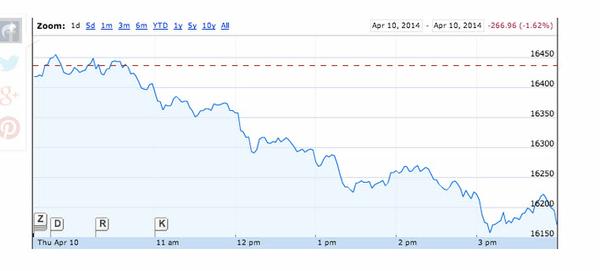
Below is a graphic of what happened yesterday with tech stocks. So what has this got to do with you? Tech stocks? You know.... Facebook, Amazon, Google ... If you market anything online this is relevant. If you're an author, this is relevant. If you're building a business based on getting Facebook leads, this is freaking CRUCIAL to understand. Facebook could go. Vanish. Cease to be. It happened to companies that were - relative to the numbers online - more significant than Facebook in the last crash. 
Image
When? Any time. Last time it took about 10 days to go from this to a slippery slope, and a couple of moths to crash completely. This time it'll probably take longer because the industry has so much more social proof behind it... but it'll crash. The feeling before the last crash was exactly as the feeling has been online over the last year. 
THIS is why I've been SCREAMING for ethics and stable business principles.
THIS is why I only work with companies that I know have the specific backgrounds that make them far more likely to be resilient in a crash than others.
THIS is why I coach my clients the way I do. I don't care if they have shiny object syndrome. I don't care if they stamp their feet and demand the latest toy. I teach them how to run RESILIENT businesses, and how to build their BRANDS in such a way that they will stand tall when everything else falls. 
If Facebook went away tomorrow, do you think people would still open my emails? Yes.
Do you think they'd still answer the phone? Yes.
Do you think I'd still get paid? Yes.
So would many people online - temporarily - if they'd taken the time to build a brand. But after that, things would change. The people who actually KNOW what they're doing in the new normal will thrive. I've done this once. I know exactly how much things change on the flip side of what we're experiencing today.
My clients and team members are safe. We'll be standing tall when the gurus who showed up after the crash fail to know what to do, and fall. Which group will you be in when the time comes?
Rebecca.'

Join me on twitter: olgaolha or facebook: MysteryAndThrillerWriters Group