Showing posts with label blog. Show all posts

Saturday, January 07, 2017

Saying goodbye to permafree or 70% royalty.

Hi All

I've just read this blog and though some of you may be interested in this post.

https://anaspoke.com/2016/10/31/saying-goodbye-to-permafree-or-the-70-royalty-or-both/
Saying goodbye to permafree. Or the 70% royalty. Or both.


Sometimes I feel like Sisyphus
Promoting and marketing
Only to see my sales tumble
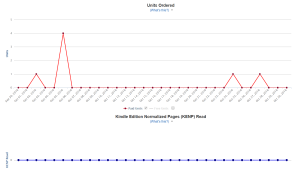
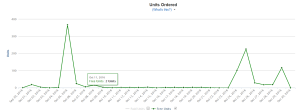
The watched pot may never boil, but whenever I take my eyes off the sales charts for a few weeks, the algorithms bury my books in the bottomless pit of the millions of unknown titles. Even worse, when I run back to the kitchen and fan the flames with marketing, the download peaks last only a day or two. Just look at the Exhibit A:
free-downloads-in-october
Fyi, the companies responsible for the peaks you’re seeing are as follows:
5 October – I don’t know whom to thank for the 367 downloads as I’d applied for a number of free services and apparently got picked up by somebody without confirmation.
24 October – BookHippo featured author, 102 downloads for FREE.
25 October – BKNights with 226 downloads for $11.
29 October – My Book Cave with 117 downloads for FREE.
As you can see, the “normal” downloads between promotions are just 3-5 books per day. What makes this even more frustrating is that I’m trying to give the first book away FOR FREE. Not only that, the permafree strategy has been in place since May, and yet instead of the snowball effect, what I have is that proverbial boulder, freefalling back to zero the moment I stop pushing. Wait, it gets worse. I jumped into permafree hoping for 2% “buy-through” of the second book, but so far it’s been less than 1% with the second book priced at $2.99. And for whatever reason, my KENP pages for Indiot have completely disappeared. Here is the Exhibit B for the same time period:
paid-sales-in-october-2016
This sucks big time, which means that I need to do something about it. Considering that I don’t want to “write to the market” or go on yet another cover redesign go-round, I’ve decided to change my pricing strategy. Radically. Like, smash it into pieces. Here are the two strategies I’m considering:
  1. Make both books $0.99 and available only through Kindle Select. Promote both with paid ads.
  2. Keep Shizzle, Inc as permafree and make Indiot $0.99 and promote only Shizzle, Inc as a freebie.
  3. Make both books free. Well, not really, but what the hell, how do I get Isa to go viral? She is destined for the big screen. I’m even more convinced of that having just suffered through “No Stranger Than Love.”
I’m thinking of trying both strategies 1&2 in stages. For starters, I am about to run a Countdown Deal on Indiot, before I make it perma-$0.99. Then after a month or so, make Shizzle, Inc $0.99 as well. Wait another month. Finish the third book. Send it to a hundred literary agents. Give up on Isa and write something along the lines of “How To Sell A Ton Of Books Without Really Trying.” That has worked for some.
If anyone has any better ideas, I’m all ears. Thank you in advance.

I don't feel making your book free on Zon Select really does anything for your overall sales. Sure you get a surge in downloads but afterwards your book goes back to "normal" - you plummet to where your were before.
I'm trying Instafreebie and seeing some results in subscribers. I'll let you know if it makes any long term difference in sales when I launch my next thriller.
What are your thoughts on this?

Friday, January 15, 2016

Pacing makes or breaks a story.

PACING
This is essential for every story whether it be a full length novel or a short story. It doesn’t matter if you’re writing romance, thriller, horror, fantasy, sci fi, or YA. You must ensure your readers will turn the page to see what happens next. Your TASK is to make the readers want to keep reading no matter what is happing around them.

  • a.     Something must happen in every scene.
  • b.     A question must remain unanswered at the end of ever chapter except the very last one.
  • c.      Ensure your Main Character propels that action. The reader wants to emphasize with the MC and intimately share experiences and the MC’s journey. Don’t give the reader a reason to stop turning the pages.
  • d.     DON’T tell the reader everything that’s going to happen before it happens as that can destroy the suspense and deprive the reader the enjoyment of surprise.
  • e.     Give your MC bigger challenges to overcome as your story progresses. These should be compelling and the MC must overcome these to move on. The MC’s character should be revealed and grow as the MC moves through these challenges.
  • f.       Throw your MC into a pressure cooker so they must do such and such by a certain time otherwise e.g. the world will end, the MC’s mother will make the biggest mistake of her life, the MC’s father will miss his flight, etc.
  • g.     Lee Child, says: “Write the slow parts fast and the fast parts slow.”
  • h.     DON’T load the first chapter with back story and descriptions as this will slow the pacing from the get go. See how much you can cut that isn’t missed. No need to tell the reader that the MC’s parents were church goers, loved a good steak, had to shop on Thursdays or the world would end, did not do the washing on a Sunday, etc. Let the reader find this out as they progress through the story and only if it moves the story forward.
  • i.        Dialogue is great but shouldn’t replace action. If you have no dialogue on any page in your story then it better be compelling otherwise the reader will stop reading.
  • j.       Aim for clarity. Less is more.
  • k.     DON’T use a longer word when a short word will do the task.
  • l.        Ensure that all unanswered questions are answered by the end of the story. If you don’t do this, then the reader will be frustrated that you left them hanging. Nothing spoils a good tale than one with an incomplete ending.
  •  

Sunday, January 10, 2016

My journey to publication and sales of Sleep then my Princess

Hi

My journey with my first thriller, being a complete novice at marketing and kindle: I uploaded The Deadly Caress and it didn't sell a single copy for about five weeks and then sold about  6 copies each time I had used the Amazon facility to reduce the book from $2.99 to 99c. I no longer use the Kindle Countdown Deal as I've found it to restricting as you have to have the book listed at or above $2.99 for 3 months prior to your sale date. And I've opted out of Kindle Select but still have the book listed for borrows but I never get any borrows anymore. Update: Just found out that Kindle changed their policy and don't allow borrows now if you're not in Kindle Select.

www.getBook.at/B00I0DI0MY

With my second thriller Sleep then my Princess, I was prepared. 

www.getbook.at/B016G5T7AG

I took advantage of the pre-order facility on Kindle and uploaded my thriller about 6 weeks before launch. Changed the cover a few times till I was happy with it. I had a guy on Fiverr do a cover but no one that I asked in my FB buddy groups really liked it. So I got another cover made with a different cover designer. Put that cover up for comment on my FB buddy groups and played with the font till it seemed okay and asked my FB groups again. The font I would have gone with was voted second best so I opted with the font which everyone thought was best. I figured, who am I to know what will draw the public eye to buy the book. I got six beta readers to read through the manuscript and they offered their suggestions which I diligently worked through. I had two editors go through the manuscript as I'm not good at picking up all the typos and over used words. 

A month prior to launch I started marketing it via FB groups (free) and my twitter page listed at 99c for pre-launch. I have to say that I'm in so many FB groups now where you can post your promo that I've lost count (maybe about 50-60).  However, FB won't let you post more than 10 promos in a certain time frame any more. They freeze your account for 14 days if you do. They want you to take up their paid promos instead.

I lined up two paid promotions for the launch date (total cost was $80). Pre-sales were at 19 units (due to FB groups) on launch day Oct 30th, Nov 2nd 19 units,  Nov 14th 90 units, Nov 23rd 89 units, and then it started dropping a little with some highs on Nov 30th 56 units, Dec 12th 50 units, Jan 4th 47, and now Jan 9th 23 units. Update: March 2016 it's at around 40 units most days.

I also did a Fiverr promo for $5.50 two weeks ago and a blog listing via Fiverr a week ago again $5.50. I might do a FB promo shortly to raise the momentum in sales. I initially intended to raise the price from 99c a week after launch but since Sleep then my Princess was selling so well, I was too scared to do this. So it's still at 99c for now.

I didn't get into the top #100 sold in the Kindle store but was in the top #12 in my category for about 7 weeks in the USA. I have now slipped to #23 in Books > Mystery, Thriller & Suspense > Thrillers & Suspense > Medical, USA. I even got into the top #35 in my category in the UK store and Au as well at one point.

I have to point out that I have got 3 awful one star reviews which haven't seemed to have stopped my sales, thank goodness. One of the reviewers couldn't even construct a sentence nor spell.

Sunday, May 17, 2015

Why is my book not selling?

What You Are Selling is Never as Important as THE REASON SOMEONE IS BUYING IT.

Let's look at how people choose a book?
a) Cover
b) blurb
c) reviews
d) Preview
e) Sympathy & friendship
f) Cheap/free


a) Cover:
Is your cover enticing?
Does it whisper at what's inside?
Does it create a feeling for the prospective reader?
Is your title easy to read?
Unless you're a graphic designer, book designer, I would suggest that you don't spend your time doing what will take time away from editing your book. Let an expert do what they do best. Give them a brief of what you like in covers which will cut down their time and cost you less.

Cover these points and you have passed the first hurdle.

b) Blurb:
Next hurdle:
Have your told your story in a nutshell without giving away the ending?
Have you made it sound thrilling?
Its a good idea to ask your writing friends to read your blurb and suggest any changes to make it better.
Also, look at key words in your blurb. This helps when readers are searching certain key words such as #thriller, #crime, #fantasy, #romance #ScienceFiction.

c) Reviews:
Gaining reviews is the bane of every author.
Gift your book to people and ask for an honest review (and I mean honest).
If you get an honest review from someone you gifted your book to. Take note and make any changes to make your book better.
There is no limit to the number of times you can tweek your book on Amazon.
If it's a substantial edit, then you can notify Amazon and they'll notify all customers who have previously purchased your book about an update.
If you have no reviews, then buyers are hesitant to take a risk on your book unless it's on sale. Therefore, do not price it too high. Usually, $2.99 is a good price point.

d) Preview:
I took out the Table of Contents in my book because it meant that in my book preview on Amazon I got a couple of extra pages when a reader clicked on the preview of my book. However, for non-fiction you will need that TOC so this won't work for you.
Post a longer preview on your blog or web site. Tweet that they can find the longer preview there.

e) Sympathy & friendship.
Now some people may wonder about this point.
Put simply, it means that someone you know will buy your book because they don't like to offend you or feel sorry for you.
But a sale is a sale and helps lift your rating on Amazon.

Those of you who constantly post buy my book in the writers Facebook groups? Does it really work? For the most part, this only gets annoying and turns people away. So initially these authors gain sales, then people turn off every time they see the post or start deleting it.

f) Cheap/free
Your book is on sale or free your rating goes up.
Some readers buy a cheap book because it's on sale but they don't read it and don't leave a review. Amazon knows if said book has been read and what percentage it's read with is reflected in its rating.
This works for the short term but long term you want reviews and word of mouth recommendations.

How do you get these?
Writing the best book you can.
Having said book edited and getting a great cover made. If you're unsure about your blurb, ask your writing friends to look it over and suggest what you can do to make it better.

Some authors will say that cheap/free works or free for them. However, you can't put money in the bank with free.

Once you have a small amount of reviews (say 10), you can experiment with pricing and put you book at a higher price and see if your sales fall. If they do, you can lower the price. Or you can lower your price on certain days and see what happens. Make it fun and make it work for you.


Promote your book on as many sites you can. No one knows of your book and your book is but a drop in the ocean of books.
Use social media to do this.
If you don't know how to do this. Just start with twitter and start following people.
Remember, your twitter profile is your public face. Likewise your web page, blog, etc.
Have pictures of your book there. Include links to your book on twitter,  your website and anywhere else readers can buy your book.
P.S. Don't forget to tweet regularly. Also, follow those that follow you. You ignore followers at your peril. 

Thursday, August 07, 2014

What makes people buy a self-published book.


Reblogged by me because this is a mine field of information that the self-published author can't ignore.


The findings surprised me (which surprised me, because I was surveying myself). I found that I knew what made me buy a self-published book when it was in front of me, but not what put that book in front of me, unless I was browsing by genre (e.g. today I feel like reading a romance set in Ulaanbaatar: therefore I will now search specifically for such a story).
It was still hard to know what put those books in front of my eyes in order to buy them; to quote one of the commenters on that post – this is the thorny issue of “discoverability”. How will we find these books in the first place?
So I did the unthinkable, and asked some other people. I surveyed readers and writers alike, in online groups for different fiction genres of crime, fantasy and general fiction,  and more than a few other people who just like to talk to other people about reading and writing. I asked them what factors influenced them most when buying books – particularly self-published books and any other books which aren’t pushed by the major houses.
Their answers were duly collected and poured into a spreadsheet, one rainy morning when I was in my pyjamas, and can be split into 2 camps. Some answers relate to discoverability; others to what makes people buy a book once it’s already in front of them.
In this sample, there are 72 answers. Some people cited more than one factor they considered before purchasing, so regardless of the order in which they placed these factors, I gave them all equal weight.
Having said that, it’s safe to say that in the vast majority of cases, if the cover was amateurish, or unappealing, the book would never have made it to the 2nd stage of vetting, be that the blurb or the sample.
Here are some lovely graphs with my findings. In case you didn’t know, I LOVE graphs. (Although take it from me, they’re hard to cuddle when you’re trying to fall asleep.)
First, we have the overall results:
Influences upon readers when buying self-published books
Overall, by far the most important factors were cover, blurb and the sample (for some, this was the first few paragraphs, through Amazon’s “Look Inside” feature; for others, the full chapters from the e-Reader sample download).
Your cover might be gorgeous. Your blurb might push all the right buttons for the hungry reader. But if there’s a mistake in your first 2 paragraphs, or the reader doesn’t like your style, then it’s good night, I’m afraid.
How Readers Discovered Books Online
Several of those surveyed said they had bought self-published books because they had seen other examples of the author online – either from their blog, commenting on other blogs, or articles in magazines or journals. They liked what they saw and then went to see what else was on offer. This is precisely what we mean when we talk about online platforms.
In the case of Twitter (which is the platform most likely to drive me mad when authors simply tweet endlessly “BUY MY BOOK!! SPECIAL ### OFFER!! BUY IT NOW ###  TODAY TODAY!!!!!! (hashtag exclamation point))) – a few people said that they liked to get a sense of the author on Twitter, and then maybe look up their book. So it wasn’t publicising the book on Twitter which sold books: it was the author being engaging on Twitter on a more personal level.
Facebook was more likely to remind those surveyed to buy the book of an author they already liked, rather than introduce them to a book for the first time.
Making The Final Book Buying Decision
Finally, it was cover, blurb and sample all the way. Reviews mattered, but in different ways. An interesting point, made by some of those surveyed, was that they looked at the worst reviews first – 1* or 2* reviews only – because they found it easier to ascertain whether they were authentic, and because they felt they got a better sense of the book from people who didn’t like it, rather than the people who said they did. (Or gave it 5 stars because they are the author’s Mammy. See here.)
Price was also an unusual issue. There were 2 distinct views: those who made impulse buys (without reading reviews or a sample) under a certain price, and those who would never bought books under a certain price point, because they had no faith that they’d be any good.
There were also good indicators on what turned readers off  self-published books. Another post will follow on that. I bet you can’t wait.
Time for you to weigh in: if you haven’t already had your say, is there something glaringly missing from the above graphs which makes your buying decision for you?


I’m surprised the title doesn’t play a bigger part in selecting a book, especially after reading this.
n 1928 the publisher E Haldeman-Julius was considered to be a literary Henry Ford who had perfected the art of merchandising the world’s classics. In the previous 10 years he had sold 100 million copies of his cheap reprints.
He believed that in order to sell a classic piece of literature, it had to have the right title. He believed that the title must have some connection with the three subjects which most appealed to the ‘reading masses’.
1. Sex
2. Self-improvement
3. Attacks upon Respectability and Religion.
His motto — By their titles ye shall sell them.
In 1926 8 000 copies of Victor Hugo’s play “Le Roi s’Amuse’ were sold. He re-named it ‘The Lustful King Enjoys Himself” and 38 000 copies were sold.
Theophile Gautier’s “The Golden Fleece” enjoyed huge sales when it was re-titled “The Search for a Blonde Mistress.”
Scopeenhauer’s “Art of Controversy” was a dead duck until Mr Haldeman-Julius published it under “How to Argue Logically.” And De Quincy’s “Essay on Conversation’ sold like hot cakes when re-titled “How to Improve Your conversation.”
Always, for obvious reasons, it has been necessary to keep the reader in mind. Any change in title must be validated by the actual contents of the book. The change must serve, not deception, but enlightenment; the change must advance some particular information as to exactly the book’s contents. It would never do to re-title Chaucer’s Canterbury Tales, for example, unless the title were also to indicate that the tales were still in archaic verse.
He never altered the text in any way — just the titles. :)

http://tarasparlingwrites.wordpress.com/2014/07/31/what-makes-people-buy-self-published-books/

Monday, January 06, 2014

Mark Coker - Smashwords predictions for 2014

Hi

I've just been reading the predictions by Mark Coker from Smashwords. I've copied and pasted it here.
Take heed. He does mention that he didn't get all of his 2013 predictions right but he's still more knowledgeable than the us little authors out there.

Many months ago I decided that to compete with the professional authors I had to get my book edited and proof read as when I tried to read some of the indie books on kindle, I found most were too bogged down with overwriting, etc and stopped. There were some indie books that were terrific reads but these were in the minority.

I listed my project for substantive editing and proofreading on Elance and got more than 85 quotes for my job. I chose an American editor as my story is set part in California and Sydney and I was aiming for the American market. Also, I thought that since I lived in Sydney, I could handle the dialogue from characters who were from Australia.

And I found that I could get a professional looking book cover done on fiverr.com instead of trying to created something myself that would take me hours if not days and would brand my story as raw (still needing polishing and not worth reading).

MONDAY, DECEMBER 30, 2013

2014 Book Publishing Industry Predictions - Price Drops to Impact Competitive Dynamics


It’s that time of year again when I polish my crystal ball and stick my neck out with predictions for the year ahead.

Last year I went out on a limb with 21 predictions.  Looking back on them now, several were spot on, several were premature but will still play out, and some were dead wrong.  That’s the fun of the prediction game.  Even incorrect predictions, analyzed in retrospect, help shape our understanding of the present and future.

Predictions stir our imagination of what’s possible.  By imagining what’s possible, indie authors can prepare for the future, or take steps to realize the future they desire.

This year, I bring fourteen predictions for 2014.
  1. Big publishers lower prices – Traditional publishers have always fought tooth and nail to hold the line on ebook prices.  By maintaining high prices, they left the sub-$5.99 market for ebooks wide open for indie authors to exploit.  For several years, indies have enjoyed this playground all to themselves.  The results of our 2013 Smashwords survey illustrated the competitive advantage indies received by pricing low.  Our 2013 survey found that books priced $2.99 and $3.99, on average, received about four times as many unit sales as books priced over $7.99.  This pricing advantage helped many indies out-sell and out-compete the traditional publishers.  It helped indies build fan bases at a rapid clip.  For indies who could write and publish low-priced books that were as good or better than what New York was publishing, placement in the bestseller lists became more achievable than ever before.  For much of 2013, it wasn’t uncommon to see indies holding up to half of the top 10 bestseller slots at major retailers on some days.  Big publishers have taken note.  In 2013 big publishers began competing more aggressively on price with temporary price promotions.  Until recently, it was rare to see a traditionally published book priced under $4.00.  In 2014 their temporary price promotions will give way to a new normal.  Discounting is a slippery slope.  Once customers are conditioned to expect big-name authors for $3.99 or less, the entire industry will be forced to go there.  The huge pricing advantage once enjoyed by indies will diminish in 2014.
  2. When everyone is pricing sub $4.00, price promotions will become less effective – If readers have an unlimited supply of high-quality books from their favorite authors at under $4.00, it means factors other than price will gain importance.
  3. Ebook growth slows – Here comes the hangover.  After a decade of exponential growth in ebooks with indies partying like it was 1999, growth is slowing.  We all knew this day was coming.  Year over year growth of 100% to 300% a year could not continue forever.  The hazard of fast-growing market is that it can mask flaws in business models.  It can cause players to misinterpret their success, and the assumptions upon which they credit their success.  It can cause successful players to draw false correlations between cause and effect.  Who are these players?  I’m talking about authors, publishers, retailers, distributors and service providers – all of us.  It’s easy to succeed when everything’s growing.  It’s when things slow-down that your mettle is tested.  The market is slowing.  A normal cyclical shakeout is coming.  Rather than fear the shakeout, embrace it.  Let it spur you on to become a better, more competitive player in 2014.  Players who survive shakeouts usually come out stronger the other end.
  4. Competition increases dramatically – With hundreds of thousands of new books published annually, and with retailer catalogs swelling to carry millions of titles, it may come across as trite for me to predict that completion will increase in 2014 for indies.  Yet in 2014, the competition faced by indies will increase by an order of magnitude, and will make some indies wish it was 2013 again.  The ebook publishing playing field, which until recently was significantly tilted in the indies’ favor, has now leveled a bit.  Yet indies still enjoy a number of competitive advantages, including faster time to market, greater creative freedom, closer relationships with readers and thus a better understanding of reader desires, higher royalties rates and ultra-low pricing flexibility including FREE.
  5. Ebook sales, measured in dollar volume, will decrease in 2014 – Yikes.  I said it.  The nascent ebook market is likely to experience its first annual downturn in sales as measured in dollar volume.  This will be driven by price declines among major publishers and by the slowing transition from print to screens.  Although readers will continue migrating from print to screens, the early adopters have adopted and the laggards will shift more slowly.  Another driver of the drop is that the overall book market growth has been moribund for several years.  As ebooks as a percentage of the overall book market increase, it means the growth of ebooks will become constrained by the growth and/or contraction of the overall book industry.  Global sales in developing countries remain one potential bright spot that could mitigate any sales contraction.
  6. Ebook unit market share will increase – Ebook consumption, measured in unit sales and downloads, and measured in words read digitally, will increase in 2014.  The industry-wide sales slowdown, caused by the drop in average prices, will mask the fact that more books will be read than ever before.  This is great news for book culture, and good news for indies who despite the loss of their once-powerful price advantage, will still be positioned to profit more from low prices, or to compete at ultra-low (sub $3.00) price points than traditionally published authors.
  7. A larger wave of big-name authors will defect to indieville – Multiple market forces will conspire to cause a large number of traditionally published authors to turn their backs on big publishers.  Publishers will try to hold the line on their 25% net ebook royalty structures, which means big authors will see their royalties suffer as prices drop and as the unit sales advantage of low prices decreases, and as the disadvantage of high prices increases.  At the same time, readers will continue to transition from print to ebooks, making the print distribution to physical bookstores less important, and thus weakening the grip big publishers once had on bigger-name authors.  Big authors, eager to maximize their net, will feel greater impetus to emigrate to indieville.
  8. It’s all about the writing – It’s back to basics time.  In a world where readers face an unlimited quantity of high-quality low-cost works, the writers who achieve the most success will be those who take their readers to the most emotionally satisfying extremes.  Books are pleasure-delivery devices.  It doesn’t matter if you’re publishing a cookbook, romance novel, gardening how-to, memoir or political treatise.  Your job as the indie author is to write that super-fabulous book.  That involves great writing and professional-quality editing.  It also means avoiding all the mistakes that create unnecessary friction that prevent readers from discovering, desiring and enjoying the book.  To understand these points of friction, and how to avoid them, check out my discussion of Viral Catalysts in The Secrets to Ebook Publishing Success, or in my Youtube video on best practices.
  9. All authors become indie authors - Back in the dark ages of publishing, you were either traditionally published or weren't published.  Writers who couldn't get a publishing deal were seen as failures, because without the access to the publisher's printing press, distribution and professional know-how, it was virtually impossible to reach readers.  Today, failure is not an option.  The next generation of writers can begin writing their book with the full confidence that one way or another, it will get published.  Traditionally published authors now realize they have desirable publishing alternatives they never had before.  Once a writer - any writer - comes to the realization that the power in the publishing industry has transfered from publishers to writers, it opens up a new world of possibilities.  Publishing no longer becomes an either/or question.  The best writers will have the option to publish independently AND traditionally, or do one or the other.  It's their choice.  Both options are worthy of consideration by all writers, and can be mutually complementary.  Even if you're a traditionally published author today, you're an indie author because you decide what happens with your next project.
  10. Subscription ebook services will change the game – If the ebook subscription services – the most notable of which are Scribd and Oyster – can make their business models work, then they’ll drive a game changing shift in how readers value and consume books.  I examined the potential implications of this in my two-part blog post on this model (read part one | read part two) .  For ebook subscription service users, reading will become an abundant resource that feels free.  It’ll become a utility service in the same way that water and electricity are utilities.  When we flip the switch to turn on a light, or when we turn the knob on the faucet to brush our teeth, we’re not thinking about how our next 60 seconds of that service will cost us one or two cents.  We pay our monthly service fee, and for the most part we use the utility as much as we want.  With ebook subscription services, the reader will pay $9 or $10 a month and enjoy virtually limitless reading.  Readers will be relieved of the cognitive load of having to decide if a given book is worth the purchase price.  Instead, they’ll surf and sample books with minimal friction, as if every book is free.  The reader’s attention, and the book’s ability to hold the reader’s attention, will become the new factor in determining a writer’s success.  Even if these subscription services fail, they'll change the future of publishing by giving readers a taste of friction-free reading-as-a-service.  It's a taste readers are unlikely to forget.
  11. Traditional publishers will reevaluate their approach to self-publishing – The vanity approach to self-publishing, as witnessed by Pearson/Penguin’s acquisition of Author Solutions (operates AuthorHouse, iUniverse, BookTango, Trafford, Xlibris, Palibrio, others…), has shown itself to be a boondoggle that harmed the brands of all traditional publishers.  I predicted this last year.  The Author Solutions business model is wholly dependent upon making money by selling overpriced services to unwitting authors.  Their business model is expensive at best, and unethical at worst.  It’s about selling $15,000 publishing packages to authors who will never earn the money back.  The model represents the antithesis of what the best and proudest publishers have always represented.  Great publishers invest in their authors.  The money flows from reader to retailer to publisher to author, not from author to publisher.  At the same time Author Solutions has tarnished the reputation of all traditional publishers - even those not engaged in such practices - the indie author revolution has continued in full swing.  Indies are stealing market share.  Indies have learned to publish like professionals.  Many indies no longer shop their books to agents and publishers, and instead choose to publish their books directly to readers using self-serve publishing and distribution platforms such as Smashwords, or KDP, Nook Press, and others.  Publishers are losing access to the critical deal flow that is their lifeblood.  I talked about this in my discussion of black swans in last year’s predictions.  If they lack an effective service offering for indie authors, the big publishers risk finding themselves on the wrong side of history as authors move on without them.  The stigma once associated with self-publishing is melting away as the stigma of traditional publishing grows.  How can publishers stem the bloodletting and recapture relationships with authors?  The answer will come by publishers reevaluating their attitude toward authors.  They must recognize that publishing is a service, and that they serve at the pleasure of authors.  Now that authors have choices, the publishing game can no longer be about, “What can the author do for the publisher?”  Authors no longer need to bow subservient to publishers, so business models based on this old practice and attitude will be rejected.  The new publisher mantra must be, “What can the publisher do for the author that the author cannot or will not do on their own?” 
    Publishers need to broaden their author services menu by creating an inclusive business model that allows them to take a risk on every author, to be able to say “Yes” to every author when the prior attitude was to say “No.”  Authors want a spectrum of options, from self-serve to full-serve, and they shouldn't have to shell out cash to their publisher for any option.   Publishers must abandon the culture of “No,” because authors no longer have the patience or tolerance to hear “No.”  Authors have choices, and they’ve gained a taste for the joys of self-publishing.  What’s this new model, where the publisher can say yes to every author, yet still earn a profit?  The answer: they need to build or acquire their own self-serve publishing platform. A self-serve platform would allow them to take a risk on every author, and to form a relationship with every author.  By operating a free publishing platform, the publishers would have the ability to serve the diverse needs of all authors.  DIY authors would select the self-serve option.  Authors with proven commercial potential who don't want to hassle with the responsibilities of being one's own publisher might opt for a path somewhere along the spectrum between DIY and full-serve (what has been heretofore been known as traditional publishing), assuming both the author and publisher desire that.  The compensation models and level of publisher investment could vary based on the level of publisher service.  Such a full-spectrum approach to publishing, where authors pay nothing, is 100% aligned with the author’s interests, and 100% aligned with the best practices of the best publishers.  A good self-serve platform doesn't employ sales people.  It doesn't take money from authors.  And that’s how it should be.  So the question is, can publishers introduce their own free self-serve platforms to broaden their services offerings?  Time is running out.
  12. Platform is king – Platform is your ability to reach readers.  Authors who can build, maintain and leverage their platforms will have a significant competitive advantage over those who cannot.  Think of your platform as a multi-layered infrastructure that allows you to reach both new and existing fans.  Elements of this infrastructure include your followings on Twitter, Facebook and the RSS feed of your blog.  It includes the breadth of your distribution (more retailers is better than fewer), your uninterrupted presence at each retailer for every book, and the reviews at those retailers.  It includes the number of authors who have “favorited” you at Smashwords, or who have added your books to their booklists at Goodreads.  It includes subscribers to your private mailing list.  It includes your celebrity, and your ability to leverage social media or traditional media or the love of your fans to get your message out.  There are two primary factors that drive sales of any product or brand.  The first is awareness.  If the consumer is not aware of your product or brand, then they cannot purchase it.  You need to put your product in front of a consumer and gain their attention before they can consider it.  The second is desire.  Once a consumer is aware of your product or brand, they must desire it.  As I talk about in my Secrets book, the author is the brand.  Your job as the author is to build awareness of your brand, and to build, earn and deserve positive desire for your brand.  Awareness plus desire create demand for your product.  This is why platform will become more important than ever in 2014.  Your platform helps you get the message out to existing fans who already know and desire your brand, and helps you reach new fans who will attach their wagons to your horse.  The larger your platform is, the easier it is to grow your platform further, because platforms grow organically.
  13. Multi-author collaborations will become more common – In 2013, I observed a marked increase in the number of multi-author collaborations.  I’ve been encouraging multi-author collaborations for a few years in the Smashwords Book Marketing Guide, but 2013 was the year the practice really took hold.  Authors are collaborating with fellow authors in their same genre or category on box set compilations of existing and original content.  These collaborations are often competitively priced and offer readers the opportunity to discover multiple new authors in a single book.  The collaborations also enable multiple authors to amplify each other’s marketing efforts by leveraging each other’s platforms.
  14. Production takes on increased importance in 2014 – One of the most important secrets to ebook publishing success is to write more books.  As a writer, your writing is your unique creation.  It’s your product.  Authors who write great books (and produce more of them), are the authors who build sales and platform the fastest, because each new book represents an opportunity to please existing fans and hook new ones.  Organize your time to spend more time writing and less time on everything else.